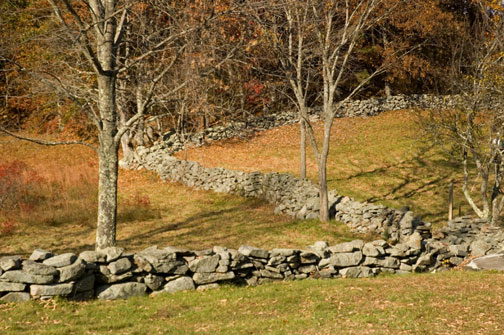
Last week we read Mending Wall by Robert Frost. Go back and read it again to your self. In a moment we are going to look at another poem about walls.
Now listen to what Roger Water's said about walls. I bet you have heard this before, but have you ever looked beyond the subject of his words. There is a point and a theme going on here.
Now open your "Am Lit View Only Folder" in Google Docs. You will find a new file there called Comparing Poems. Follow the directions at the top of the page. Ask for help if you need it.
You have homework: Read the poem The Latin Deli on page 1224 in your textbook. After you read it write (on paper) a response to the poem in which you discuss the subject of the poem and the ideas in it. If you wish to read it on line the book it is in can be found here through Google Books. It is on page 3. You will need to scroll to it.
Monday, January 10, 2011
Comparing poems about walls
Labels:
Another Brick in the Wall,
Comparing Poems,
Google Docs,
Mending Wall,
poetry,
Robert Frost,
Roger Waters,
Theme,
Walls
Friday, January 7, 2011
Mending Wall
Poems have two parts, a subject and an idea. The idea leads you to the theme. Sometimes you can figure out the idea without understanding the subject.
Today we will look at a famous poem, Mending Wall by a famous poet, Robert Frost. It has a very clear subject this time, but can you figure out the idea? (This is the reverse of yesterday.)
The poem is shared with you in your writing group folder. Please go to docs and find the poem in your folder. Listen while I play the poem for you and then use the chat window to discuss it with your group. Remember your guidelines for discussions about literature.
Today you are specifically looking for the IDEAS of this poem.
Labels:
Chat,
Discussion,
Frost,
Google Docs,
group discussion,
Mending Wall,
Theme
Thursday, January 6, 2011
What makes a poem?
Today we looked at a poem by Sylvia Plath without the title. I asked you what you thought it was about. You gave me many interesting answers, various animals, various groups of people, etc. None of them were the true subject of the poem though. (I knew they would not be right.) Then I asked you for the ideas in the poem. You told me conquering, rebellion, growing, nature, coming of age, revolution, etc. Your ideas about the ideas in the poem were all great. Even without knowing for sure what "things" the poem was about you could still figure out the ideas in it.
Poems have two component parts, a subject and an idea. Sometimes you can figure out the idea even if you cant figure out the subject.Below is the presentation of the poem with LITTERAL images. Litteral is when something is exactly what it says. You told me this poem is really FIGURATIVE. The author is using metaphor and personification to describe her subject. The real subject of the poem is pictured on the very last slide.
Wednesday, January 5, 2011
Explaining your visual metaphor
You'll meet with your group today to explain the visual metaphor that you created yesterday. You'll only have 10-15 minutes max.
Explain what you drew and why.
Challenge each other to extend your answers.
____________ is the __________________ because he said, "______________________" which means that _________________________, and that lead to _______________________________.
Explain what you drew and why.
Challenge each other to extend your answers.
____________ is the __________________ because he said, "______________________" which means that _________________________, and that lead to _______________________________.
Tuesday, January 4, 2011
Visual Mataphors of Civil Disobedience
Today you will create / draw a visual metaphor to show how the thinking of Emerson, Thoreau, Gandhi and King are connected. I drew an example on the board. You need to come up with your own. I will explain more in class.
Labels:
Civil Disobedience,
Dr. Martin Luther King Jr.,
Drawing,
Emerson,
Gandhi,
Metaphor,
Thoreau,
Visual Metaphor
Monday, January 3, 2011
Making a table to track our learning
Good Morning,
Welcome back. Lets get to it with a little recap.
Today I want to teach you some things about using tables in Google Docs (or any word processor)
A table is great for organizing information to help you brainstorm, or present information to others.
In your English Journal you are going to create a table with two rows and two columns. Like the one below.
Welcome back. Lets get to it with a little recap.
Today I want to teach you some things about using tables in Google Docs (or any word processor)
A table is great for organizing information to help you brainstorm, or present information to others.
In your English Journal you are going to create a table with two rows and two columns. Like the one below.
Rows go across and columns go up and down.
Label your two top cells Content and Skills. Use the cells underneath each box to list the content and skills you know NOW after being in this class. Use your EJ, the blog and any other docs you need to help you find the things you want to use to complete your table.
I'll be popping into your EJ to check your progress.
Labels:
English Journal,
Google Docs,
Review,
Table,
Teaching
Thursday, December 16, 2010
Civil Disobedience- Looking at examples.
These four articles all deal with recent examples of Civil Disobedience. In a way they have all been successful because they brought enough attention to their cause to make the news, but some are more likely to create real change than others.
Read through the articles. Think about what you know now about Civil Disobedience. Evaluate which of these cases is the most likely to result in real changes.
Write an entry in your English Journal to explain which case of Civil Disobedience is the most likely to result in change and why you think that.
UC Fee Hikes
Cindy Sheehan
Nuns Arrested
Blue Shield
Read through the articles. Think about what you know now about Civil Disobedience. Evaluate which of these cases is the most likely to result in real changes.
Write an entry in your English Journal to explain which case of Civil Disobedience is the most likely to result in change and why you think that.
UC Fee Hikes
Cindy Sheehan
Nuns Arrested
Blue Shield
Labels:
Analysis,
Civil Disobedience,
English Journal,
Synthesis
Wednesday, December 15, 2010
Stride Toward Freedom -King
We have seen how Thoreau's ideas on civil disobedience influenced Gandhi. Today we will see how those ideas were used during the American civil rights movement.
We will read an excerpt from Stride Toward Freedom by Dr. Martin Luther King Jr. You will work with a partner to read the text and answer the questions on this form about what you read.
"Prior to reading Gandhi, I had about concluded that the ethics of Jesus were only effective in individual relationships. The "turn the other cheek" philosophy and the "love your enemies" philosophy were only valid, I felt, when individuals were in conflict with other individuals; when racial groups and nations were in conflict a more realistic approach seemed necessary. But after reading Gandhi, I saw how utterly mistaken I was." -MLK
We will read an excerpt from Stride Toward Freedom by Dr. Martin Luther King Jr. You will work with a partner to read the text and answer the questions on this form about what you read.
Labels:
A Stride Toward Freedom,
Analysis,
Civil Disobedience,
Dr. Martin Luther King Jr.,
Form,
Gandhi,
Google Forms,
Partner,
Questions
Tuesday, December 14, 2010
Following the train of thought...
If you've been with us you should know by now what Emerson said in "Self Reliance", and what Thoreau said in "Civil Disobedience". Today we will see their thinking magnified by Mohandas K. Gandhi.
You know that America was once one of many British colonies. India was also a British colony. In the 1930's Gandhi used his ideas about civil disobedience, his word was satyagraha, to help free India from British rule.
Today we will read a short excerpt from his speech on Civil Disobedience if you would like to read the full text you can find it here.
There is a copy of the text in your shared folder to read with your group. Only use the link above if for some reason you can not access the text in docs.
You know that America was once one of many British colonies. India was also a British colony. In the 1930's Gandhi used his ideas about civil disobedience, his word was satyagraha, to help free India from British rule.
Today we will read a short excerpt from his speech on Civil Disobedience if you would like to read the full text you can find it here.
There is a copy of the text in your shared folder to read with your group. Only use the link above if for some reason you can not access the text in docs.
Labels:
Civil Disobedience,
Emerson,
Gandhi,
Image,
Thoreau
Friday, December 10, 2010
Discussing "Civil Disobedience"
Good morning,
You've been doing an excellent job discussing Emerson (Self Reliance) with your group in an on-line chat. Today I want to let you talk to each other face to face again. We are going to look at the writing of one of Emerson's friends, Henry David Thoreau.
Thoreau wrote an essay called "Civil Disobedience" We are going to read parts of it. This is what Gandhi said about "Civil Disobedience".
"Thoreau was a great writer, philosopher, poet, and withal a most practical man, that is, he taught nothing he was not prepared to practise in himself. ... He went to gaol for the sake of his principles and suffering humanity. His essay has, therefore, been sanctified by suffering. Moreover, it is written for all time. Its incisive logic is unanswerable." - Mohandas Gandhi
We are going to read excerpts of "Civil Disobedience". Between each paragraph I will give you a few minutes to discuss the text with your group. Remember what you have learned about discussing literature from your on-line discussions.
You've been doing an excellent job discussing Emerson (Self Reliance) with your group in an on-line chat. Today I want to let you talk to each other face to face again. We are going to look at the writing of one of Emerson's friends, Henry David Thoreau.
Thoreau wrote an essay called "Civil Disobedience" We are going to read parts of it. This is what Gandhi said about "Civil Disobedience".
"Thoreau was a great writer, philosopher, poet, and withal a most practical man, that is, he taught nothing he was not prepared to practise in himself. ... He went to gaol for the sake of his principles and suffering humanity. His essay has, therefore, been sanctified by suffering. Moreover, it is written for all time. Its incisive logic is unanswerable." - Mohandas Gandhi
We are going to read excerpts of "Civil Disobedience". Between each paragraph I will give you a few minutes to discuss the text with your group. Remember what you have learned about discussing literature from your on-line discussions.
Labels:
Analysis,
Civil Disobedience,
Discussion,
Gandhi,
Literature,
Thoreau
Subscribe to:
Posts (Atom)